Woodworm Treatment
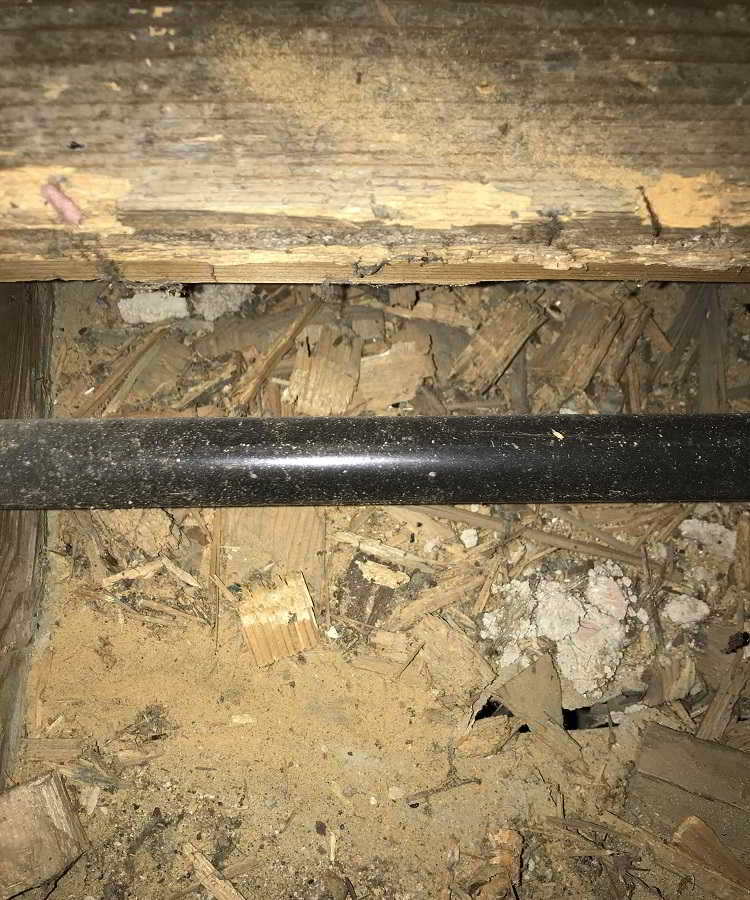
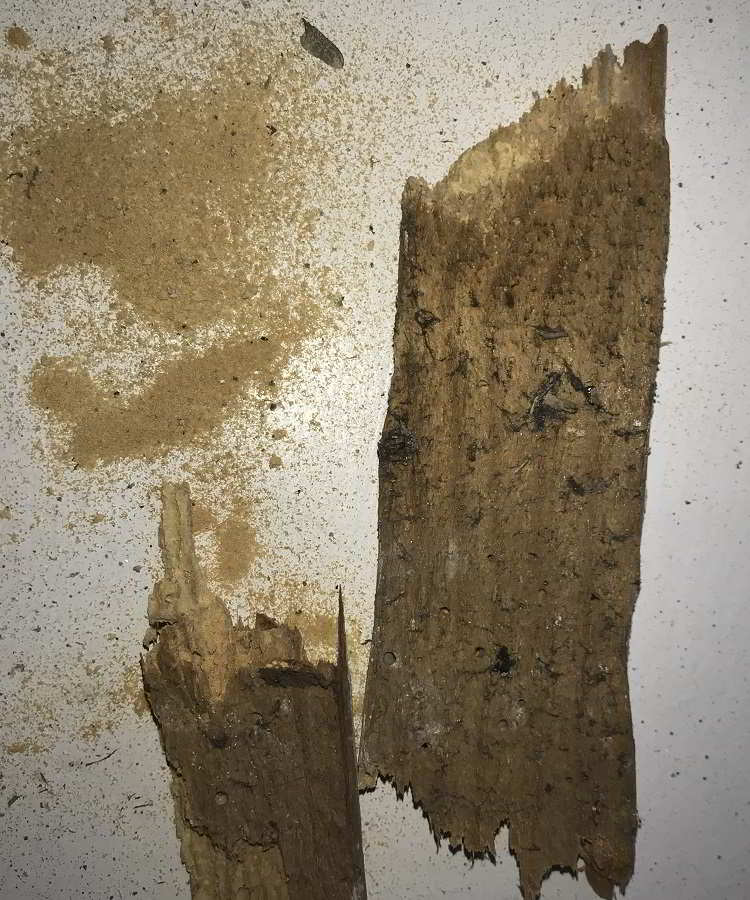
What is causing the tiny holes you may find in your timber floor or roof timber?
Give us a call and one of our qualified surveyors can either discuss with you over the phone or why not arrange a survey.
Need Advice? Call : 0131 313 2093
Woodworm And Wood Boring Insect Infestation
Woodworm infestation (Anobium Punctatum) is one of the most common infestations in Scottish houses, commonly known as Common Furniture beetle!
A number of insects are able to use wood as a food source and some of them can cause serious damage to building timbers. These insects all have fairly similar lifecycles, but there are variations in the stages of each lifecycle, the type of wood attacked and the extent of damage caused.
The presence of damage caused by wood boring insects does not always mean the insect is active. That is why correct identification and diagnosis is essential, no treatment may be necessary.
The insects bore through the timber gaining nitrogen, proteins and amino acids from the cells. A fungus then develops on the wood which makes digestion easier. This is why wood borers are often attracted to damp timbers with fungal infection.
The Common Furniture Beetle belongs to the same family as the Death Watch Beetle, it is the most frequent cause of woodworm damage in the UK. Despite its name this insect more frequently causes damage in structural timbers than in furniture, which is why in Australia and elsewhere it is known as the Common House Borer. Its presence can be identified by the presence of 2mm emergence holes and cream coloured lemon shaped pellets known as bore dust.
The most common mistakes are to misidentify the Wood Boring Weevil or the Bark-Borer Beetle as the Common Furniture beetle. (The former has smaller emergence holes and finer bore dust, and needs no treatment once any source of damp has been removed. The latter is usually found outside in recently dead trees or in completely debarked logs which have been used as floor joists no treatment is required.)

How We Can Help With Expert Woodworm Treatments?
Identify the type of infestation, identify any structural weakened timbers, specify repairs which should be carried out before any insecticide is applied.
The detailed recommendations for your particular property are within the report you will receive, tailored to your specific problem.
The treatments are carried out by our own Operatives.
However in general terms once we have identified the insect responsible for the damage the next step is to see whether it is active. If it is not and there is no structural damage no treatment is necessary. If it is active we firstly determine whether structural repairs are necessary. Most infestations in Scotland do not require extensive structural repairs, usually it is only necessary to have the odd floorboard repaired or perhaps some structural timbers strengthened. If the insect is active we will treat the infected areas with an insecticide. This involves clearing the area concerned to expose the timbers.
The most common areas treated are floors and roof timbers as they are important to the structure of the building. Less common areas are staircases and panelling. If structural timbers have been significantly impaired, strengthening will be required. Usually only localised repairs are necessary. If the damage is more drastic we would request the assistance of a structural engineer to confirm recommendations for repairs.
Our Operatives will arrive on site with appropriate P.P.E.
On completion of the treatments, we will issue our invoice and where appropriate, our guarantee will be sent out on full settlement.
Our Operatives will ensure that your property is left clean and tidy.